Can Modern Smiles Dental Implants Help Protect Your Gumline Over Time?
Dental implants are designed to replace missing teeth in a way that looks natural, feels secure, and supports long-term function. But for many patients, the concern is not just whether the implant will work. It is whether it will continue to look good years from now.
One of the most important details in implant dentistry is the gumline. When the gum tissue around an implant begins to recede, it can affect the appearance of the final crown and, in some cases, expose parts of the implant structure underneath. The good news is that modern implant design, careful placement, and thoughtful restoration planning can help reduce this risk and support healthier tissue over time.
At Modern Smiles in North Hollywood, Dr. Kasra Tajik and Dr. Naji Hamoui use advanced imaging, digital planning, and a personalized approach to create implant treatment plans that are built around your anatomy from the beginning. No shortcuts. No one-size-fits-all dentistry. Just precise care designed to protect the health, comfort, and appearance of your smile.
What Is Gum Recession Around a Dental Implant?
Gum recession happens when the soft tissue around a tooth or implant begins to pull back. Around natural teeth, this can be caused by gum disease, aggressive brushing, genetics, aging, or changes in bone support.
Around dental implants, recession is a little different. Because an implant does not have the same natural ligament structure as a tooth, the surrounding bone and gum tissue need to be carefully protected from the start. If an implant is placed too far forward, positioned at the wrong angle, placed without enough bone support, or restored with a crown that puts pressure on the tissue, the gumline may begin to change over time.
This can lead to:
An uneven gumline
Darkness or shadowing near the implant crown
Visible metal or implant components
Inflammation around the implant
Food trapping or difficulty cleaning the area
A less natural-looking final result
Gum recession is not always preventable, but careful planning can make a major difference.
Why Implant Design Matters
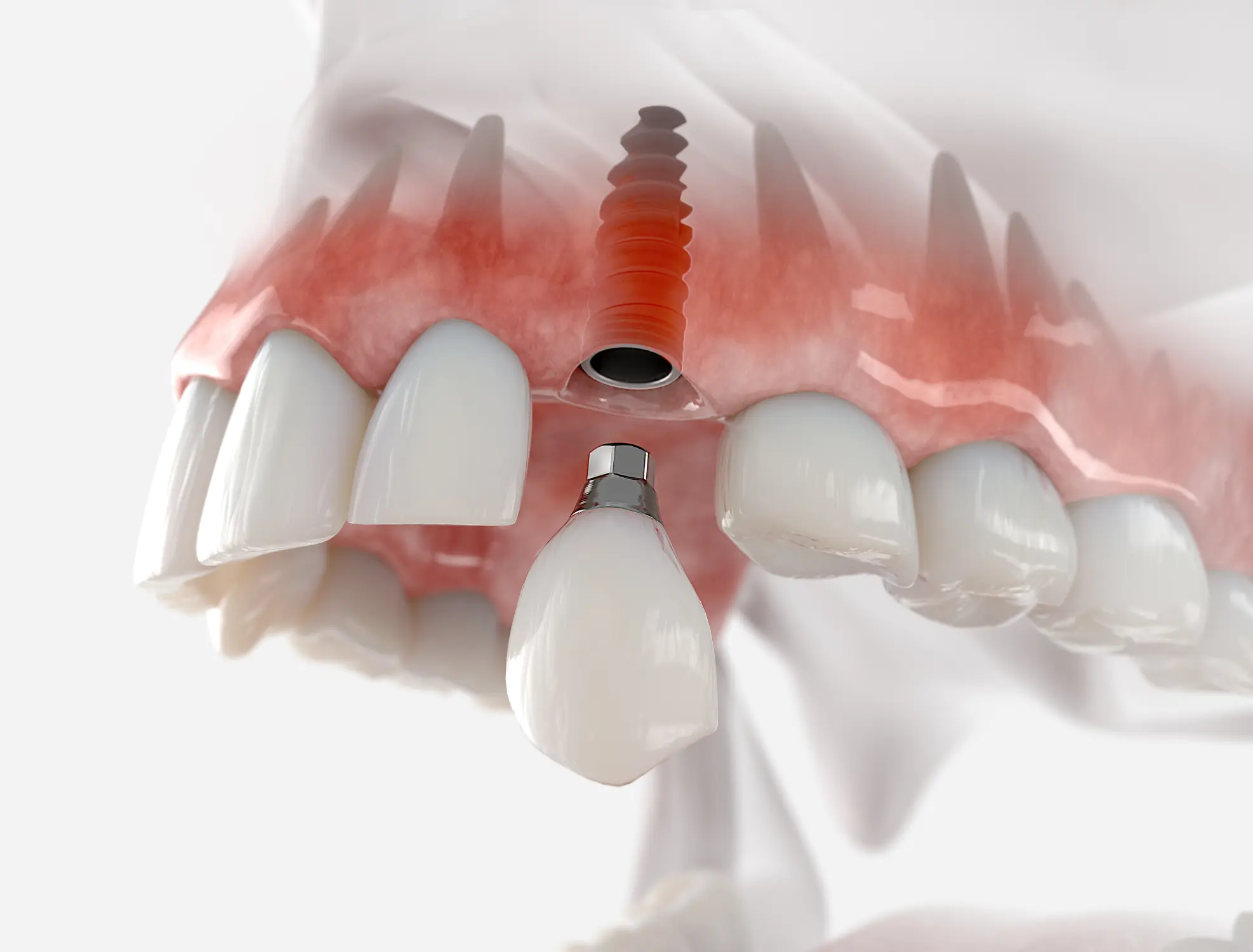
Modern dental implants are not just small posts placed in the jaw. They are thoughtfully engineered systems designed to support bone, soft tissue, and the final crown that sits above the gums.
Every detail matters, from the shape of the implant to the connection between the implant and the crown. When these details are chosen and placed properly, they help create a healthier foundation for the gum tissue around the restoration.
Tapered Implants Can Support Better Stability
Many modern implants are designed with a tapered shape, which more closely resembles the natural shape of a tooth root. This design can help the implant fit more securely within the jawbone and create strong initial stability at the time of placement.
Stability matters because movement can interfere with healing and place stress on the surrounding tissue. When an implant is stable and well-integrated with the bone, the gum tissue has a better environment to heal and maintain its shape.
This is especially important in areas that show when you smile, where even a small change in gum position can affect the final appearance.
Platform Switching Helps Protect the Tissue Around the Implant
Some modern implant systems use a design feature called platform switching. This means the connector between the implant and the crown is slightly narrower than the implant itself.
That small design shift can help move the implant connection inward, away from the outer edge of the bone and gum tissue. In the right case, this may help preserve the bone around the implant and support a more stable soft tissue seal. For patients, the benefit is simple: the better we can protect the tissue around the implant, the more natural and long-lasting the final result can be.
Implant Surface Design Supports Bone Integration
For a dental implant to last, it needs to integrate with the jawbone. This process is called osseointegration.
Modern implants often have specially treated surfaces that help bone cells attach to the implant more predictably. When the implant integrates well, it becomes a stable foundation for the crown, bridge, or full-arch restoration placed on top. Strong bone support is one of the most important factors in maintaining the gumline around an implant. When the bone is healthy and stable, the soft tissue has better support too.
The Crown Design Matters Just as Much
The implant itself is only part of the equation. The crown attached to the implant also plays a major role in the long-term health of the gums.
An implant crown needs to be shaped carefully. If it is too bulky, too narrow, too deep under the gumline, or difficult to clean, it can irritate the tissue and make inflammation more likely.
At Modern Smiles, implant restorations are designed with both aesthetics and biology in mind. The goal is to create a crown that blends naturally with your smile while supporting the gum tissue around it. That means paying attention to the emergence profile, the contour, the bite, the color, and the way the crown fits into your overall smile.
How Technology Helps Us Plan More Precisely
The best way to protect the gumline is to plan the implant properly before it is ever placed.
At Modern Smiles, we use advanced technology such as 3D CBCT imaging and digital scanning to evaluate your bone structure, gum tissue, bite, and surrounding teeth. This gives us a clearer understanding of where the implant should go, how much support is available, and whether additional steps are needed to create a healthier foundation.
This kind of planning helps us answer important questions early:
Is there enough bone to support the implant?
Is the gum tissue thick enough around the area?
What angle and depth will create the best long-term result?
Will bone grafting or tissue support be needed?
How should the final crown be shaped for comfort and cleanability?
The more we understand up front, the more precise and predictable your treatment can be.
What Patients Can Do to Protect Their Gumline
Even with excellent planning and modern implant design, long-term success depends on how the implant is cared for after treatment. Dental implants cannot get cavities, but the tissue around them still needs consistent care. Plaque buildup, inflammation, and bite stress can all affect the health of the implant over time.
To help protect your gumline, we recommend:
Brushing gently with a soft-bristled toothbrush
Cleaning around the implant daily with floss, interdental brushes, or tools recommended by your dentist
Keeping up with regular dental cleanings and exams
Wearing a nightguard if you grind or clench your teeth
Avoiding smoking or vaping, which can affect healing and tissue health
Calling your dentist if you notice bleeding, swelling, soreness, or changes around the implant
Is Gum Recession Around Implants Always Avoidable?
Not always. Some patients are naturally more prone to recession because of thin gum tissue, previous bone loss, gum disease, bite forces, or the position of the missing tooth. In other cases, recession may be related to older implant designs or treatment that was completed without today’s level of digital planning. But with the right approach, the risk can often be reduced.
Modern implant treatment is about understanding the full picture: the bone, the gums, the bite, the restoration, and the way everything works together. When those details are respected, the result is more stable, more natural-looking, and easier to maintain.
Thoughtful Implant Care in North Hollywood
A dental implant is a long-term investment in your health, comfort, and confidence. It should be planned with that same level of care.
At Modern Smiles in North Hollywood, Dr. Kasra Tajik and Dr. Naji Hamoui take a precise, personalized approach to implant dentistry. From digital imaging to final restoration design, every step is guided by your anatomy and your goals. If you are considering dental implants or have concerns about gum recession around an existing implant, we are here to help you understand your options clearly.
Call (818) 763-9353 to schedule a consultation at Modern Smiles.
Related Posts

Can a Full Mouth Reconstruction Fix Short, Flattened Teeth Caused by Chronic Stress Grinding?
How Do Clear Aligners Move Stubborn or Rotated Tooth Roots Without Traditional Metal Braces?
Can Modern Smiles Dental Implants Help Protect Your Gumline Over Time?